High performance epoxy and polyaspartic coatings for garage, basement, patio and driveway concrete floors. Built to handle family traffic, spills and years of daily wear.
A properly installed epoxy floor turns raw or worn concrete into a seamless, easy to clean surface that resists oil, road salt, hot tires and everyday knocks. We prep the slab the right way so the finish actually lasts.
Every project starts with diamond grinding to open the concrete, full crack and joint repair, then a coating system matched to how the space is used. No shortcuts on surface prep, because that is where most failing floors go wrong.
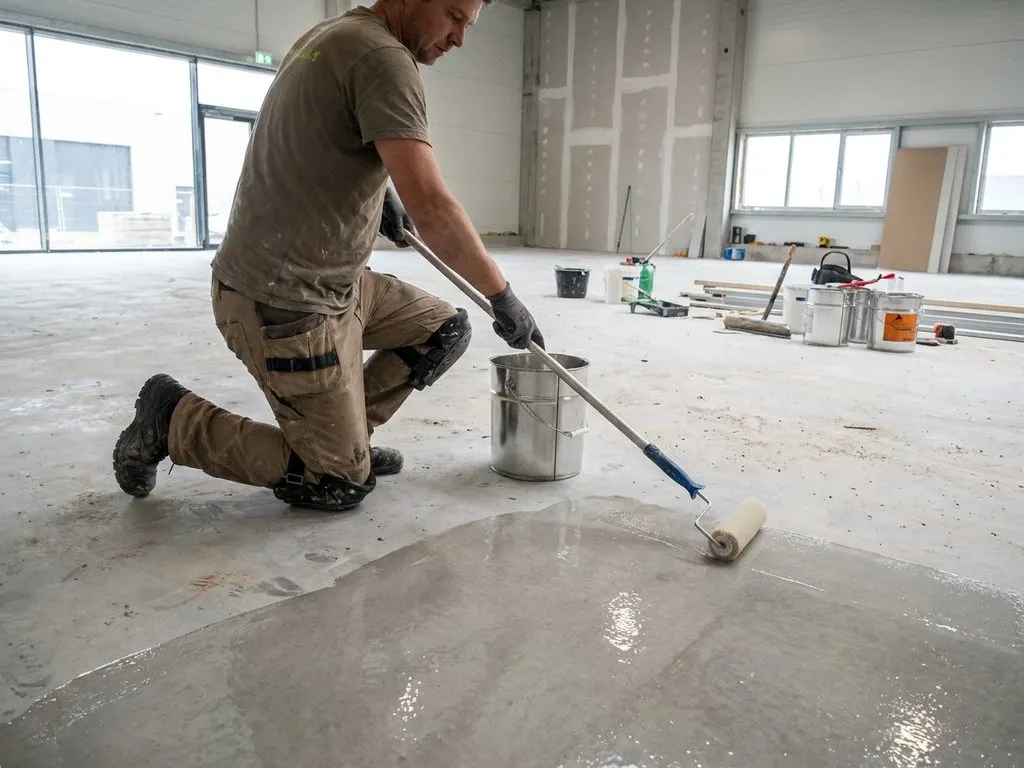
One crew, the full range of resinous floor systems for every concrete floor around your home.
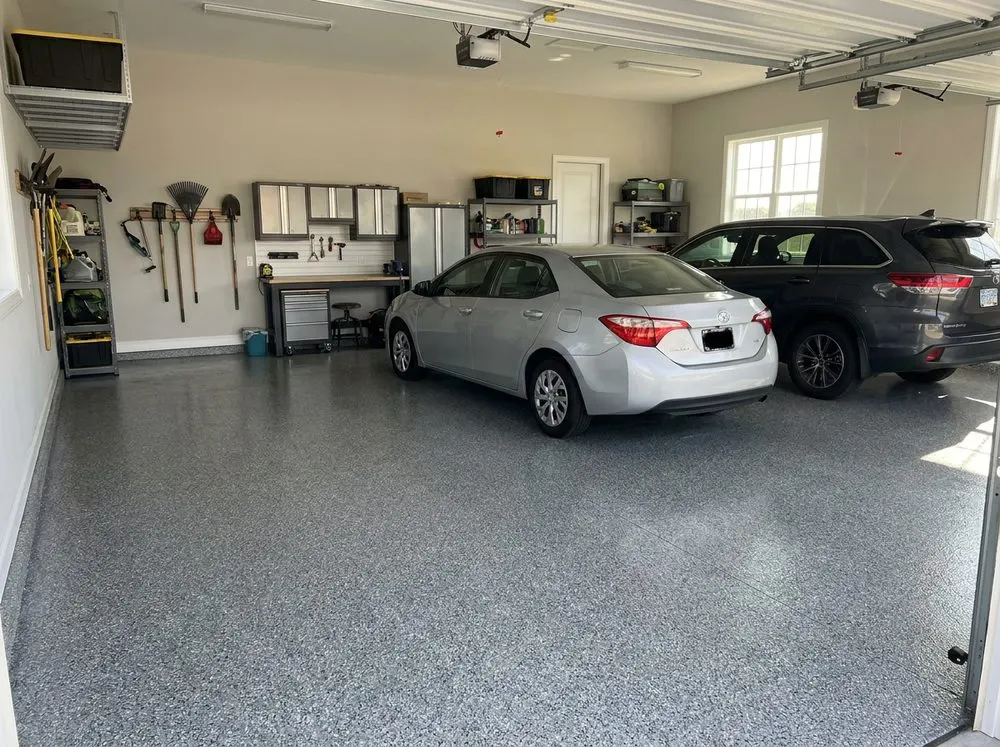
Hot tire resistant epoxy and polyaspartic finishes with optional decorative flake for a clean, durable garage floor.
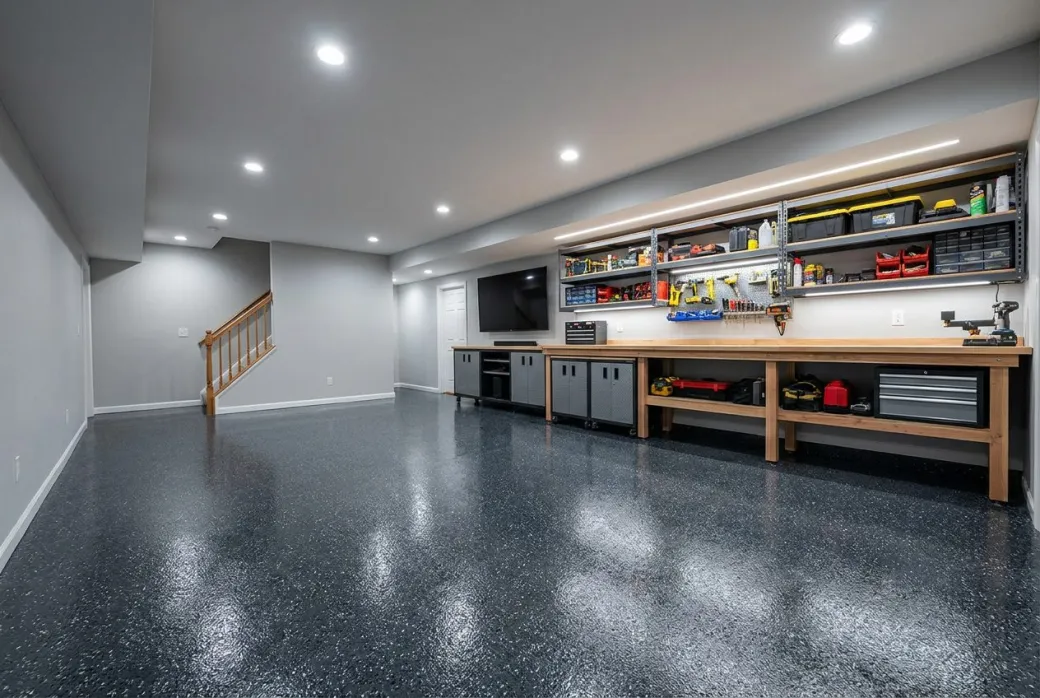
Seamless, moisture resistant systems that turn a damp, dusty basement into clean, comfortable living space.
Marbled metallic epoxy and full flake broadcast floors for entryways, dens and standout rooms throughout the home.
Fast cure systems that let you walk back on the floor the next day, ideal for spaces that cannot sit idle for long.
Diamond grinding, crack filling, joint repair and moisture testing so the new coating bonds and stays bonded.
Slip resistant aggregate, stain resistant top coats and easy clean cove base for laundry rooms, mudrooms and wet areas.
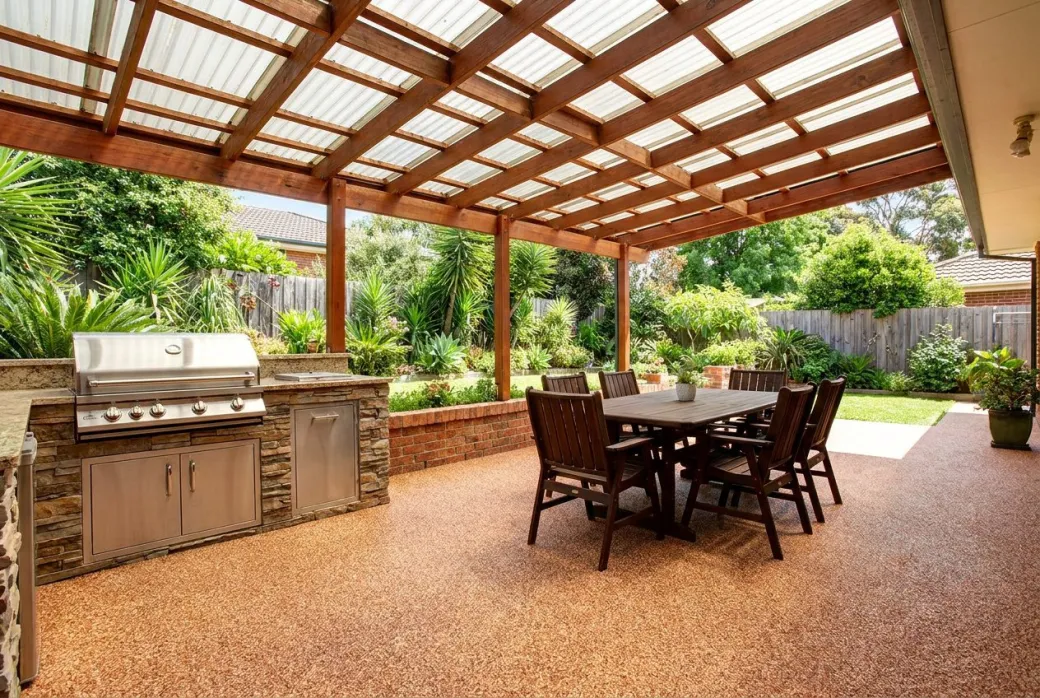
A look at the kind of finishes we deliver across garages, basements and patios.
We measure the slab, check moisture and condition, then talk through how the space gets used.
Diamond grinding plus crack and joint repair to give the coating a sound surface to bond to.
Base coat, optional flake or metallic, then a tough protective top coat applied in even passes.
We let the system cure to spec, do a final inspection and hand back a floor that is ready for use.
We are floor coating specialists, not a general contractor that coats floors on the side. Prep is done properly and the materials are matched to the job.
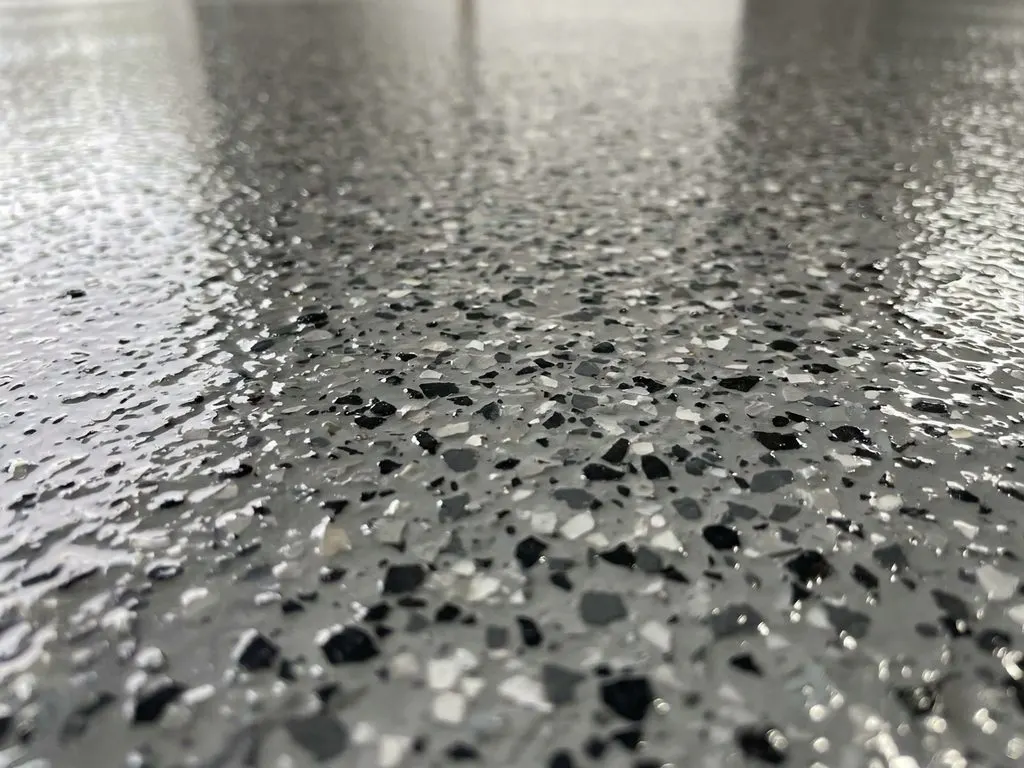
From single car garages to whole finished basements, we coat concrete floors for homeowners nationwide. Tell us your city and the size of the space, and we will line up the right crew and system for the job.
Call and tell us about your floor. We will talk through the options and give you clear pricing on the spot. No cost and no obligation.
Hours: Mon to Fri 7am to 6pm, Sat 8am to 2pm
Whether you are coating a single garage in the United States or a whole finished basement, an epoxy or polyaspartic system is one of the most cost effective ways to turn bare, dusty concrete into a hard wearing, easy to clean surface. This guide explains how the systems work, the options available, what they cost, how long they last, and what separates a floor that lasts twenty years from one that peels in two.
Epoxy is a thermosetting resin. Two components, a resin and a hardener, are mixed and chemically cure into a rigid, plastic like layer bonded tightly to the concrete below. That chemistry is the key difference between an epoxy floor and ordinary floor paint: paint simply dries on the surface, while epoxy reacts and forms a seamless, non porous membrane that becomes part of the slab. Since the mid twentieth century it has been the dominant resinous flooring because of its adhesion and durability. The same chemistry applies in the United States whether the floor is a two car garage or a busy family mudroom; only the system thickness and finish change.
A properly installed epoxy or polyaspartic floor resists oil, grease, road salt, hot tires, many chemicals and constant abrasion. Because it is seamless and non porous, there is no grout or texture for dirt to hide in, so it wipes clean and stays hygienic. The bright, reflective finish makes a space feel larger and better lit, which improves safety. On top of that, the floor protects the concrete underneath, adds value, and can be finished with anti slip aggregate where grip matters.
The right system depends on how the space is used and your budget, which is why we match the build to the job rather than selling one product for everything.
If there is one thing to understand about epoxy, it is this: the single biggest cause of coating failure is poor surface preparation. A coating can only grip concrete that has been mechanically opened up. That means diamond grinding or shot blasting to create the right surface profile, repairing cracks and joints, filling spalled areas, and removing oil and contaminants. It also means moisture testing, because vapor rising through a slab can lift even the best coating. We never skip the grind, because a floor is only as good as the preparation beneath it.
A typical project in the United States follows the same disciplined sequence. First we assess the slab, checking its condition, moisture and how the space is used. Next comes mechanical preparation by diamond grinding, followed by crack and joint repair. We then apply a penetrating prime coat for adhesion, build the body coat and broadcast flake or pour metallic if chosen, and finish with a tough clear top coat, adding anti slip aggregate where needed. Finally the floor is left to cure to specification, inspected and handed back ready for use.
Cure time depends on the system and the conditions. Standard epoxy usually accepts light foot traffic within roughly a day and full vehicle traffic after several days as it reaches full hardness. Polyaspartic systems cure much faster, often allowing foot traffic the next day and vehicles within about twenty four hours, which is why they suit spaces that cannot sit idle. Temperature and humidity affect everything, so we schedule around the conditions on the day.
With proper preparation and the right top coat, a residential garage floor performs for many years, and a well maintained coating commonly lasts ten to twenty years or more. One of the quiet advantages of resinous flooring is that it does not have to be torn out when it ages; in most cases the surface can be re scuffed and given a fresh top coat instead of being sent to a landfill, which extends its life and lowers long term cost.
Price is driven by the size of the slab, its condition and how much preparation it needs, the system chosen, the number of coats, anti slip requirements and access. As a rough national guide, typical residential coatings fall in the region of a few dollars to low double digits per square foot, with thicker high build systems costing more. The only accurate number is one based on your actual floor, which is why estimates in the United States are free and given in writing after we see the slab.
Maintenance is simple. Sweep or dust mop regularly, clean with a pH neutral cleaner and water, wipe up spills, and avoid harsh acids and abrasive pads that can dull the finish. For high traffic floors, a fresh top coat applied years down the line restores the shine and adds more service life.
Big box store kits tempt many homeowners, but they are usually thin, water based products applied with minimal preparation, which is why so many peel within a season or two. Professional systems use higher solids materials and proper diamond grinding, and that difference in preparation and product is what you are really paying for.
If you want a durable, good looking floor that holds up to real use, call (844) 980-1506 for a free, no obligation quote. We will talk through the right system for your space and give you a clear written price.
Browse by region, state and city. We coat garage, basement and patio floors for homeowners nationwide across the United States.
